


Topgun Days
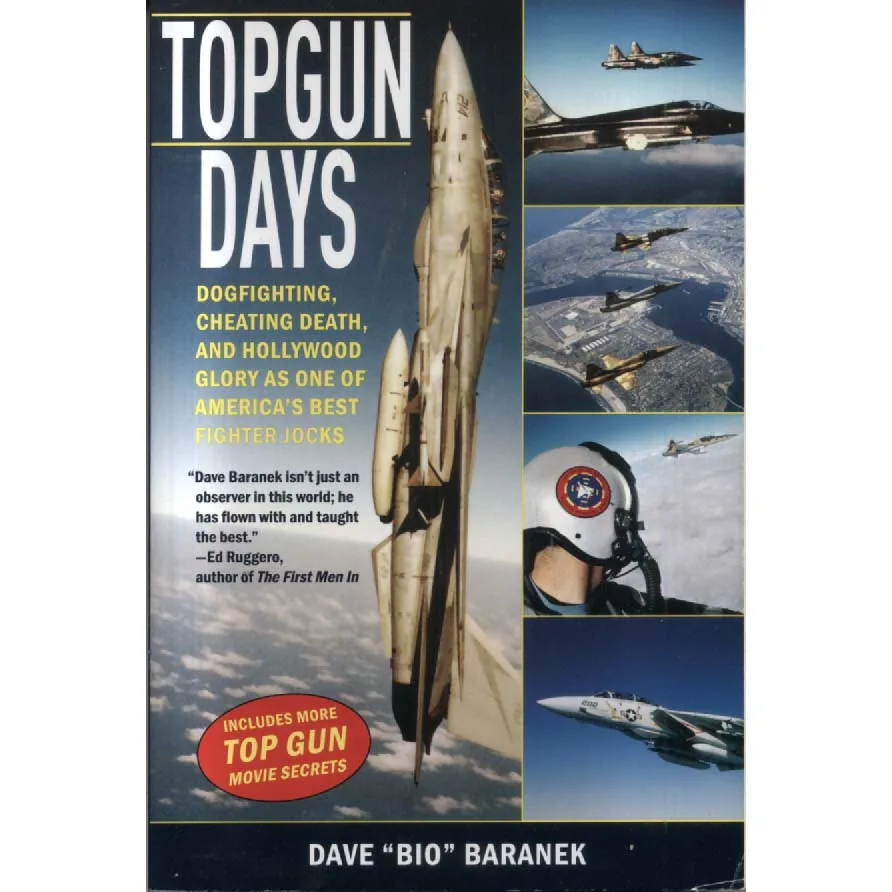
Publisher: Skyhorse Publishing
Format: Paperback
ISBN: 9781620871034
Dave Baranek’s Topgun Days is a memoir from inside the real Navy Fighter Weapons School, where the sunglasses were earned, the call signs were not issued by a casting director, and the flying was considerably less interested in dramatic pauses than the cinema later suggested. Baranek was not just near the Topgun world; he lived in it, worked in it, flew in it, instructed in it, and eventually helped supply some of the real aviation texture that Hollywood would turn into mythology with better lighting.
This is Topgun before and beyond the poster: fighter tactics, training, debriefs, carrier aviation, F-14 Tomcats, adversary flying, weapons, instructors, students, standards, egos, mistakes, correction, sweat, noise and the strange business of teaching very confident people to become even better without letting confidence turn into expensive wreckage. The glamour is present, but mostly in the way high performance is glamorous: demanding, precise, repetitive, unforgiving and supported by a great deal of work nobody can fit into a trailer.
Baranek writes about the Navy fighter community from the inside, with the human detail that makes the machines feel inhabited. Pilots and radar intercept officers do not simply leap into jets and become heroic silhouettes against a sunset. They brief, plan, study, strap in, fly, fight, listen, fail, improve, get torn apart in debriefs, and then do it again. The sky may look wide open, but the profession is built on discipline, procedure and the useful discovery that being wrong at altitude has limited charm.
The irony of Topgun is that it became famous as a symbol of swagger, when its real purpose was to make swagger earn its keep. The school existed because air combat had exposed hard lessons, and lessons in aviation are rarely delivered softly. Topgun took talent and sharpened it: tactics, situational awareness, threat knowledge, weapons employment and the relentless habit of asking what actually happened rather than what everyone hoped had happened. A good debrief is not there to preserve feelings. It is there to preserve aircraft and people.
Naturally, the film hovers in the background like a very handsome ghost with a soundtrack. But this book is valuable because it gives the reality behind the myth: the work, the aircraft, the people, the procedures, the laughter, the strain and the absurdity of being part of a military school that the world would later imagine as a beach-volleyball philosophy with jets attached. Reality, as usual, had more paperwork and better stories.
For readers of naval aviation, Topgun history, F-14 Tomcats, fighter tactics, Cold War air combat culture, memoirs from the cockpit community, or books where “professionalism” involves terrifying speed and highly specific criticism, this is a highly readable bit of shelf material. It has the hardware, the characters, the training world and the welcome reminder that elite performance is less about posing near aircraft and more about surviving the debrief.
Very Good copy, as sold by Crappy Old Books. A smart copy, cleared for another sortie, with no known requirement for aviators, leather jacket, or permission to buzz anything. Ready for the aviation shelf, where it can sit looking calm while quietly making nearby film tie-ins feel underqualified.
Keep browsing: See more War books Other books by Dave Baranek
